

Views: 0 Author: Site Editor Publish Time: 2026-03-31 Origin: Site


Accurate spraying is essential for effective crop protection and nutrient management. In our experience with agricultural spraying systems, many field performance problems are caused not by the spray product itself, but by poor calibration. Even a high-quality sprayer can underperform if the application rate is too high, too low, or uneven. That is why we always emphasize one principle: calibration should come before every important spraying task.
When a sprayer is properly calibrated, it delivers the intended amount of liquid evenly across the target area. This improves application effectiveness, reduces chemical waste, lowers the risk of crop injury, and supports better environmental management. In contrast, inaccurate spraying can cause underdosing, overdosing, drift, weak pest control, unnecessary costs, and even resistance problems over time. In this article, we explain how to calibrate your sprayer for accurate application in a practical and field-focused way.
Sprayer calibration is the process of matching the machine’s output to the desired application rate under real operating conditions. In simple terms, it answers a basic but critical question: how much liquid is actually being applied per unit area?
Many operators assume that once a sprayer is assembled and running, it is ready to work. In reality, several variables affect output at the same time, including nozzle size, pressure, travel speed, nozzle wear, boom height, row spacing, and liquid flow consistency. Even small changes in one of these variables can produce a noticeable difference in field results.
We view calibration as a practical management tool rather than a technical burden. Good calibration helps us:
apply pesticides, herbicides, fungicides, and foliar fertilizers at the correct rate;
improve target coverage and deposition;
reduce overlaps and missed areas;
lower input costs by avoiding excessive application;
protect crop health and yield potential;
support compliance with good agricultural practice.
In modern farming, where both efficiency and sustainability matter, accurate sprayer application is no longer optional. It is part of responsible field management.
A sprayer should not be calibrated only once and then forgotten. We recommend treating calibration as a routine activity. In practice, calibration should be checked:
at the beginning of each spraying season;
when changing nozzles or spray tips;
after replacing pressure regulators, pumps, hoses, or flow components;
when switching to a different target application rate;
when changing operating speed significantly;
after long storage periods;
whenever uneven spray patterns or abnormal performance are observed.
Even if the machine appears to be operating normally, nozzle wear alone can gradually change flow rate. A small increase in nozzle output across the whole boom can mean substantial over-application across many hectares.
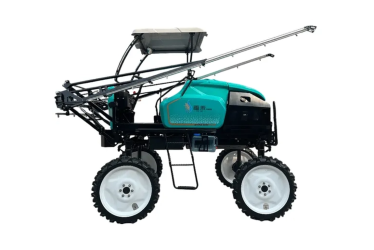
Before discussing the calibration steps, it is helpful to understand the variables that shape the final spray rate.
The nozzle is one of the most influential parts of the sprayer. Each nozzle is designed to deliver a certain amount of liquid at a certain pressure. Over time, wear can enlarge the orifice and increase flow rate. Damage, clogging, or inconsistent manufacturing quality can also affect output.
Pressure affects both flow rate and droplet size. Higher pressure generally increases output and creates finer droplets, while lower pressure reduces output and often creates coarser droplets. Pressure must be stable and appropriate for the selected nozzle type and spraying objective.
Ground speed has a direct relationship with application rate. If the sprayer moves faster while nozzle output remains the same, less liquid is applied per unit area. If it moves slower, more liquid is applied. This is one of the most common causes of inaccurate spraying in the field.
For boom sprayers, nozzle spacing and boom height affect overlap and uniformity. If boom height is incorrect, the spray pattern may not overlap properly, leading to stripes of over- or under-application.
Even if the average application rate is technically correct, inconsistent nozzle-to-nozzle output can still reduce performance. Uniformity across the entire system is just as important as total volume.
In most cases, calibration does not require complicated equipment. We typically suggest preparing the following:
clean water for testing;
a measuring jug or graduated container;
a stopwatch or timer;
a pressure gauge in good working condition;
a tape measure or measuring wheel;
a notebook or digital record sheet;
personal protective equipment if residues may remain in the system.
Using water instead of chemical solution is the safest and most practical approach for routine calibration.
Below is a practical workflow that we recommend for field sprayer calibration. The exact details may vary depending on whether the machine is a boom sprayer, orchard sprayer, knapsack sprayer, or self-propelled unit, but the basic logic remains consistent.
Calibration should never begin with a machine in poor condition. We first inspect the entire spraying system. This includes checking:
tank cleanliness;
hoses for leaks or damage;
filters and strainers for blockage;
pump performance;
pressure regulator function;
nozzle condition and alignment;
boom stability and height control.
If mechanical issues are present, calibration results will not be reliable. Maintenance comes first.
Nozzle choice should match the application target, crop stage, spray product, and drift requirements. For example, herbicide applications may prioritize drift reduction, while fungicide coverage may require different droplet characteristics.
The selected nozzle should be able to deliver the target application volume within a practical operating pressure range. If the nozzle is too small, the operator may need excessive pressure to reach the desired rate. If it is too large, pressure may become too low for proper spray formation.
Before measuring output, we need to define the desired rate. This is often expressed in liters per hectare or gallons per acre. The target rate depends on agronomic recommendations, label instructions, crop canopy, and field conditions.
Without a clear target, calibration becomes guesswork.
Many operators rely on tractor dashboard readings or assumptions about field speed, but actual working speed may differ because of terrain, load, wheel slip, or operator habits.
To measure real travel speed, we mark a known distance in the field, such as 100 meters. Then we drive the sprayer at the normal operating speed with the sprayer configured as it would be during actual work. We record the time needed to cover that distance.
The measured speed should reflect real spraying conditions, not road transport speed. A sprayer moving through uneven ground or crop rows behaves differently from a machine on a flat yard.
With the sprayer running and clean water in the tank, we set the intended operating pressure and allow the system to stabilize. Stable pressure is essential. Fluctuating pressure creates fluctuating flow.
At this stage, we confirm that the pressure gauge is functioning correctly and that the regulator responds properly. If the pressure cannot be held steady, that issue should be fixed before moving further.
This is one of the most important steps in the entire process. We collect output from each nozzle, usually for a fixed period such as one minute, using a graduated container.
The measured output of each nozzle should be compared against the average output of the full set. If one nozzle differs too much from the average, it should be cleaned or replaced. A worn or partially clogged nozzle can distort the spray pattern and ruin distribution uniformity.
In practice, we pay close attention not only to the average rate, but also to nozzle consistency across the machine.
Once nozzle output, speed, spacing, and pressure are known, we compare actual delivery with the desired application rate. If the measured rate is too high or too low, we adjust one or more controllable variables, usually:
pressure;
travel speed;
nozzle size.
In most cases, extreme pressure adjustments are not ideal because they can change droplet quality. When the gap is large, selecting a more suitable nozzle is often the better solution.
Calibration should not stop after the first correction. Once changes are made, the system should be tested again to verify that the desired rate has actually been achieved. Rechecking prevents assumptions and confirms that the sprayer is ready for field work.
The following table shows a simple calibration checklist that can help organize the process.
Calibration Item | What to Check | Why It Matters | Typical Corrective Action |
Nozzle condition | Wear, clogging, damage, spray pattern | Directly affects flow rate and uniformity | Clean or replace worn nozzles |
Pressure stability | Gauge reading under operating conditions | Influences flow and droplet size | Repair regulator, gauge, or pump issues |
Travel speed | Actual working speed in field conditions | Determines volume applied per unit area | Adjust driving speed or transmission setting |
Boom height | Height above target surface | Affects overlap and coverage uniformity | Reset boom height according to nozzle type |
Filter cleanliness | Tank, line, and nozzle filters | Prevents uneven flow and blockage | Clean or replace filters |
Hose and fittings | Leaks, cracks, loose connections | Leaks reduce output accuracy and safety | Tighten or replace components |
Nozzle-to-nozzle consistency | Individual collected output comparison | Ensures even application across width | Replace inconsistent nozzles |
Final application rate | Measured output versus target | Confirms calibration success | Fine-tune pressure, speed, or nozzle choice |
If we had to summarize sprayer calibration in one sentence, it would be this: accurate application begins with verified machine output, not assumptions.
A well-calibrated sprayer helps ensure that every pass across the field is productive, consistent, and aligned with the intended agronomic result. By checking nozzle performance, pressure, speed, and distribution regularly, we can greatly improve application precision and avoid many preventable field problems.
At Shandong Yuhe Intelligent Agricultural Equipment Co., Ltd., we believe that precision spraying starts with practical equipment knowledge and disciplined operating habits. If you would like to learn more about sprayer performance, calibration methods, and agricultural spraying equipment solutions, readers are welcome to learn more from Shandong Yuhe Intelligent Agricultural Equipment Co., Ltd.
Q: Why is sprayer calibration important for accurate application?
A: Sprayer calibration ensures that the machine delivers the intended spray volume uniformly across the target area, helping improve treatment effectiveness, reduce waste, and prevent under- or over-application.
Q: How often should a sprayer be calibrated?
A: A sprayer should be checked at the start of the season, after replacing nozzles or key components, when changing target rates, and whenever uneven spraying or abnormal output is noticed.
Q: What are the main factors that affect sprayer calibration?
A: The most important factors include nozzle flow rate, spray pressure, travel speed, nozzle spacing, boom height, and overall system uniformity.
Q: Can worn nozzles affect spray application accuracy?
A: Yes. Worn nozzles usually increase flow rate and reduce uniformity, which can lead to inaccurate application, wasted inputs, and inconsistent crop protection results.
