

Views: 0 Author: Site Editor Publish Time: 2026-04-03 Origin: Site


Choosing the right sprayer for a small farm is not only about equipment cost. It affects daily labor, application accuracy, crop protection quality, and the efficiency of the entire management process. In our experience, many growers begin by asking which sprayer is cheaper, but the more useful question is which sprayer is better suited to their land, crops, and working routine.
For some small farms, a manual sprayer is still a practical and economical tool. For others, a powered sprayer quickly proves its value by saving time, reducing operator fatigue, and improving consistency. In this article, we compare manual vs. powered sprayers for small farms from a practical perspective, helping readers understand the strengths, limitations, and ideal uses of each option.
Small farms often operate under tight budgets, limited labor, and highly practical working conditions. Unlike large commercial operations, many small farms need equipment that can handle multiple tasks without creating unnecessary complexity. A sprayer may be used for pesticides, herbicides, foliar fertilizers, disinfectants, or general plant protection, often across different crops and field layouts.
Because of this, the choice between manual and powered sprayers has a direct impact on real farm work. The right sprayer can improve field efficiency, reduce wasted chemicals, and make repeated spraying operations easier to manage. The wrong one can increase labor pressure, create uneven coverage, and slow down essential crop protection tasks.
A manual sprayer is a device that relies on human force to build pressure and deliver liquid through a nozzle. Common types include hand-pump sprayers, compression sprayers, and lever-operated backpack sprayers. They are widely used in gardens, nurseries, vegetable plots, and small farm fields where the spray area is limited and the workload is manageable.
In a manual spraying system, the operator creates pressure by pumping by hand or by using a lever mechanism. That pressure forces the liquid out through the nozzle and onto the crop surface. Because the system is mechanically simple, it is easy to use and easy to maintain in most situations.
Manual sprayers continue to be popular on small farms for several reasons. They are affordable, lightweight, easy to transport, and do not require fuel, charging systems, or engine maintenance. For growers who spray only occasionally or cover limited areas, manual sprayers still provide a practical solution.
A powered sprayer uses a battery, electric motor, or small engine to create spray pressure and maintain liquid flow. For small farms, common examples include battery backpack sprayers, compact motorized sprayers, and small portable power sprayers designed for orchards, vegetables, greenhouse crops, or mixed-use farms.
Instead of relying on the operator to pump continuously, a powered sprayer uses a mechanical system to maintain pressure. This allows the spray output to remain more stable during operation. In many cases, the operator mainly focuses on movement and nozzle direction, while the machine handles pressure generation.
As labor becomes more limited and farm tasks become more time-sensitive, many small farms begin moving toward powered spraying systems. Powered sprayers can increase working speed, reduce fatigue, and support more uniform application. For farms with frequent spraying schedules, this often makes a noticeable difference.
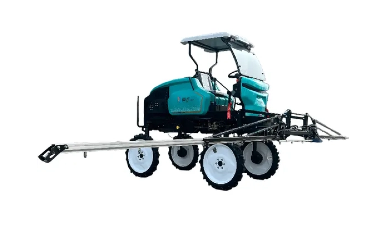
At the most basic level, the difference between manual and powered sprayers comes down to labor input, output consistency, and overall working efficiency. Manual sprayers require lower initial investment, but more physical effort. Powered sprayers require higher upfront cost, but they reduce operator strain and usually deliver more stable performance.
Feature | Manual Sprayers | Powered Sprayers |
Initial cost | Lower | Higher |
Operating effort | High | Low to moderate |
Pressure consistency | Depends on operator pumping | More stable |
Coverage speed | Slower | Faster |
Maintenance needs | Simple | More components to maintain |
Suitable farm size | Very small to small plots | Small to medium small-farm workloads |
Best for | Spot spraying, light use, limited budgets | Frequent spraying, larger areas, reduced fatigue |
Power source | Human force | Battery, electric motor, or engine |
Many growers make their first decision based on purchase cost alone. That is understandable, especially for smaller operations. However, we usually recommend looking at the total working cost over time instead of the price tag alone.
Manual sprayers are much less expensive to buy. This makes them attractive for beginning farmers, seasonal users, or growers with very limited acreage. For operations with light spraying demands, the lower investment can be a sensible choice.
Powered sprayers cost more at the beginning because they include pumps, motors, batteries, or engines. Even compact models for small farms usually represent a greater financial commitment.
Although powered sprayers cost more upfront, they may reduce long-term labor costs and improve work efficiency. If spraying is frequent, the time saved can become more valuable than the difference in purchase price. Faster application can also be important when weather windows are short or when pest pressure rises quickly.
In practical terms, a sprayer should be evaluated not only by what it costs to buy, but by what it helps the farm accomplish over an entire season.
Labor is one of the biggest differences between manual and powered sprayers. This factor is often underestimated until spraying becomes a repeated task during a busy season.
Manual sprayers place more physical stress on the operator because pressure must be built and maintained by repeated pumping. Over a short session, this may not be a problem. But over a larger area or a longer spraying period, fatigue can become significant.
Fatigue affects more than comfort. It can also reduce spraying quality. When the operator tires, walking speed may change, pumping may become less consistent, and application uniformity may decline.
Powered sprayers significantly reduce physical strain because the machine maintains pressure. The operator can focus more on movement and spray direction, which improves comfort and often leads to better work quality. This is especially valuable on farms where one person must handle many jobs in the same day.
For older operators, labor-limited farms, or farms with regular spray schedules, reduced fatigue may be one of the strongest reasons to choose a powered sprayer.
Consistent application is critical in crop protection. The spray product can only perform well if it is delivered properly and evenly.
Manual sprayers can work effectively, but the output often depends heavily on how steadily the operator pumps. Pressure can rise and fall during use, affecting droplet size and spray volume. This may not matter much for simple spot treatments, but it can become a serious limitation during larger applications.
Powered sprayers usually maintain more even pressure, which supports more consistent spray output. This helps improve coverage and reduces the risk of uneven application. While calibration and nozzle selection still matter, powered systems usually give the operator a more stable foundation for accurate spraying.
Small farms often cannot afford repeated applications caused by uneven treatment. Poor spray consistency can lead to weed escape, weak pest control, or patchy disease management. For this reason, a more stable sprayer can improve both efficiency and crop results.
Maintenance matters because spraying equipment must be dependable during critical crop protection periods.
Manual sprayers are relatively simple. They usually require basic cleaning, seal inspection, nozzle care, and occasional replacement of worn parts. Because they have fewer components, they are easier to understand and repair in the field.
Powered sprayers require more attention because they include additional systems such as pumps, batteries, motors, wiring, or engines. They need proper charging or fuel handling, component inspection, and more structured upkeep.
However, a well-built powered sprayer can still be highly reliable if maintained properly. The important point is that the user must be prepared for slightly more technical maintenance responsibilities.
Comparing manual vs. powered sprayers for small farms is ultimately about matching equipment to real agricultural needs. Manual sprayers offer simplicity, low cost, and flexibility for light work. Powered sprayers offer greater efficiency, reduced fatigue, and more stable application for farms with heavier workloads.
As agricultural equipment needs continue to evolve, small farms benefit most when they choose sprayers based on practical performance rather than assumptions. At Shandong Yuhe Intelligent Agricultural Equipment Co., Ltd., we believe that good spraying equipment should help growers work more efficiently and more confidently. Readers who want to learn more about sprayer options, application efficiency, and equipment selection for small farms are welcome to learn more from Shandong Yuhe Intelligent Agricultural Equipment Co., Ltd.
Q: What is the main difference between manual and powered sprayers for small farms?
A: The main difference is how spray pressure is generated. Manual sprayers rely on human pumping, while powered sprayers use a battery, motor, or engine to maintain pressure and improve working efficiency.
Q: Are manual sprayers still useful for small farms?
A: Yes. Manual sprayers are still useful for very small plots, spot spraying, greenhouse corners, nursery work, and farms with occasional spraying needs or limited equipment budgets.
Q: Why do powered sprayers improve spraying efficiency?
A: Powered sprayers reduce physical effort, maintain more stable pressure, and allow operators to cover larger areas more quickly, which helps improve both work speed and spray consistency.
Q: How should a small farm choose between a manual and powered sprayer?
A: The choice should depend on spray area, frequency of application, labor availability, desired efficiency, and willingness to manage maintenance. Farms with frequent or larger workloads usually benefit more from powered sprayers.
