

Views: 0 Author: Site Editor Publish Time: 2026-05-28 Origin: Site


Modern agriculture is experiencing a rapid operational shift toward organic soil amendments. Farms increasingly rely on compost, raw manure, biochar, and pelletized organics to build long-term soil health. However, this transition introduces a major equipment challenge. Farmers face a severe physical disparity between uniform, dry synthetic granules and bulky, moisture-heavy organic materials. Traditional machinery often struggles under these new demanding physical parameters. We provide a transparent evaluation framework to help you assess your current machinery options. You will learn if a standard Agricultural Fertilizer Spreader can handle these inputs safely. We explore whether dedicated organic spreading equipment is necessary instead. This guide helps minimize your operational risk and prevents costly mechanical failures. You can confidently select the right tool for your specific soil amendments.
Material physics dictate equipment limits: High moisture content and variable particle sizes in organic materials frequently cause bridging and uneven spread patterns in standard equipment.
Hardware non-negotiables: Successful application of bulk organics requires steep hopper angles, aggressive agitation, and often a belt or chain conveyor rather than a simple gravity feed.
Pelletized vs. Bulk: Standard agricultural fertilizer spreaders can easily handle pelletized organics, but raw compost or wet manure requires specialized structural reinforcement.
Calibration complexity: Organic materials require frequent recalibration due to density variations load-by-load.
High-moisture, fibrous materials pack together tightly inside the equipment hopper. They cling tenaciously to the metal side walls. This compaction quickly forms a solid arch over the delivery gate. We call this frustrating phenomenon "bridging." Once an arch forms, gravity fails completely to pull the material down. The spinner discs below starve for input. They spin emptily while tons of valuable compost remain stuck above. You must physically stop the tractor to break this arch. You have to climb out and restore flow manually. This interrupts your field operation constantly. It wastes precious labor hours and burns unnecessary diesel fuel.
Synthetic granules offer consistent weight and highly predictable flow dynamics. Compost and manure behave entirely differently in the field. Their bulk density changes drastically based on humidity, temperature, and age. A single overnight rain shower increases compost weight significantly. Fresh manure flows much slower than heavily aged manure. These constant variations render standard synthetic calibration charts completely obsolete. You cannot rely on factory settings when handling bulk organics. The equipment requires constant adjustment by the operator to maintain target application rates. Failing to adjust settings leads to severe over-application or under-application. Both errors harm your crop yields ultimately.
Fresh manure contains high acidity levels and active microbial populations. These biological characteristics accelerate metal rust extremely quickly. They degrade unprotected mild steel hoppers rapidly. Moving parts suffer intense wear under these harsh conditions. Standard equipment usually lacks the heavy-duty industrial coatings required for raw organics. Over time, acidic manure eats directly through thin gauge metal. It aggressively attacks standard bearings and exposed spinner mechanisms. You must prioritize stainless steel construction to survive these corrosive agricultural environments. High-quality polyurethane coatings also offer excellent protection against rapid degradation. Protecting your machinery investment requires choosing the right materials upfront.
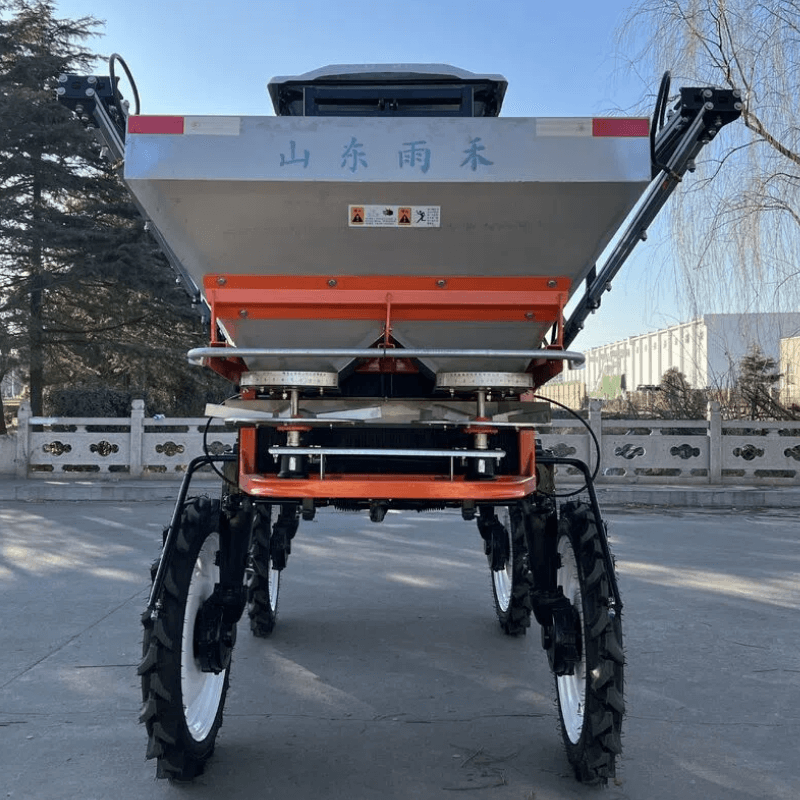
Standard units often feature shallow hopper walls designed for dry conditions. These angles work perfectly fine for uniform dry granules. Sticky organic materials demand much steeper slope angles. You need 60-degree sloped walls to maintain proper gravity flow. Shallower angles allow wet compost to grip the sides aggressively. This geometry forces the operator to constantly stop and manually push the material down. Steeper walls naturally break this mechanical friction. They keep sticky bulk inputs moving smoothly toward the delivery gate. Investing in proper hopper geometry saves endless hours of frustration in the field.
Gravity-drop systems simply let material fall through an open lower gate. They clog constantly when handling wet organic matter. Bulk materials need active mechanical force to exit the hopper reliably. Floor chains, apron belts, or walking-floor systems solve this major problem. These mechanical delivery systems actively pull material backward toward the spinners. They force-feed heavy compost directly to the distribution system. Wide apron belts prevent clogging entirely. They guarantee a steady, uninterrupted supply of bulky amendments regardless of moisture content. Relying purely on gravity is a guaranteed path to failure for raw manure.
Standard wire agitators gently stir lightweight dry pellets to prevent minor clumping. Heavy compost easily snaps these thin wires immediately. Bulk organics demand heavy-duty, hydraulically driven augers. Aggressive rotary agitators aggressively break apart compacted chunks of manure. They churn the heavy mass constantly to ensure fluidity. This active motion prevents bridging before an arch ever starts to form. A robust agitator acts as the functional heart of any organic spreading operation. It ensures a consistent feed rate regardless of varying moisture levels. Never underestimate the power required to agitate wet compost properly.
Dense organic matter requires specialized rear distribution hardware. You often need wider drop zones to handle the massive volume. Twin-spinner setups throw heavy material efficiently across wide swaths. They spread wide patterns without overloading the tractor Power Take-Off (PTO). Heavy, wet manure requires far more kinetic energy to travel through the air. You must configure the deflectors precisely to manage this heavier trajectory. Proper spinner design prevents the material from simply dropping in thick bands. It ensures an even nutrient blanket behind the tractor.
| Equipment Category | Best Suited For | Primary Limitations |
|---|---|---|
| Standard Broadcast Spreader | Pelletized manure, dry biochar, highly refined organics | High risk of clogging, severe PTO strain on wet material |
| Retrofitted Spreader | Moderately processed, strictly low-moisture compost | Struggles during heavy rain, limited hopper capacity |
| Dedicated Compost Spreader | Raw manure, heavy wet compost, bulky poultry litter | Higher initial capital, heavier tractor horsepower needed |
These traditional machines excel under very specific operational conditions. They work flawlessly for pelletized poultry manure. You can also use them successfully for dry granular biochar. Highly refined organic fertilizers flow perfectly through their gravity gates. A standard Agricultural Fertilizer Spreader distributes standardized organic pellets exactly like synthetic fertilizer. However, serious mechanical limitations exist. You face an extremely high risk of clogging if you introduce wet inputs. Raw, unprocessed materials will quickly strain your tractor PTO beyond safe operating limits.
Many budget-conscious farmers try modifying their existing granular units. This approach involves adding aftermarket electric vibration units. You might upgrade the internal agitator pins for more durability. Some operators weld hopper extensions to increase total carrying capacity. This strategy carries strict success criteria you must follow. Retrofitting remains viable only for moderately processed, low-moisture compost. If your compost pile gets wet, the retrofits will likely fail. Simple vibrations cannot substitute for a fully mechanical belt delivery system.
These heavy-duty machines handle the toughest agricultural inputs available. They are custom-built for raw manure application. Heavy compost and bulk litter flow easily through them. They feature tough walking floors and aggressive rear beaters. However, certain trade-offs do exist. You face a much higher upfront capital expenditure. You also need significantly heavier tractor horsepower to run the hydraulic systems. They potentially offer less precision for fine micro-dosing applications. They prioritize massive volume and steady flow over pinpoint accuracy.
Calibrating bulk organics demands strict attention to physical details. A single pre-season calibration is entirely insufficient. Batch-to-batch moisture variances change the spread rate constantly throughout the day. Use the catch-and-weigh method to guarantee field accuracy.
Remove the spinner discs entirely from your equipment rear.
Attach a sturdy collection pan directly under the delivery gate.
Drive a measured test distance at your standard operating speed.
Weigh the collected organic material accurately using a digital scale.
Calculate the tons-per-acre actual application rate based on the weight.
Repeat this straightforward process whenever a newly delivered load arrives. You must adjust your gate settings as the material dries out or absorbs rain.
Heavy organic matter creates immense mechanical stress on your drive train. Dense, wet material often bridges high up in the hopper. When this solid bridge finally collapses, tons of weight suddenly crash down. This massive impact slams violently onto the delivery mechanism. It risks shearing safety PTO pins instantly. It can also burn out expensive hydraulic motors. You must monitor the hopper material closely during operation. Never allow wet compost to sit overnight inside the machine. It will compact into cement and destroy the drive train upon morning startup.
Dry compost behaves very unpredictably in the open air. You must address the harsh reality of field "wind drift." Gusts easily blow fine organic dust far away from your target zone. Conversely, wet manure suffers from a severe clumping effect. It falls in heavy, damaging chunks directly behind the tractor tires. Both scenarios lead to highly uneven nutrient distribution across the soil. This inconsistency causes localized crop burning and wasted fertilizer. You must adjust spinner speeds carefully based on material weight. Proper deflector angles help mitigate these costly uniformity issues.
First, calculate your precise tons-per-acre organic nutrient requirements. High-volume field applications demand specific machine holding capacities. A small tractor-mounted unit requires constant field refilling for bulk organics. This repetitive process wastes valuable field time and fuel. If you apply high volumes frequently, you absolutely need a pull-type bulk spreader. It holds enough raw material to make long field passes efficient. Smaller operations applying low volumes might survive using three-point mounted units.
Match the spreading equipment directly to your chosen input material. Examine what you actually plan to spread this season. If you purchase standardized, pelletized organic fertilizer, you have an easy choice. A standard unit suffices perfectly for this task. Hard pellets flow cleanly and predictably. If you generate on-farm raw compost, your strategy must change immediately. Unprocessed manure demands aggressive physical handling. You should prioritize a specialized unit equipped for heavy, wet inputs.
Your existing tractor fleet heavily dictates your equipment options. Dedicated organic spreaders consume massive amounts of mechanical power. Ensure your tractor has the required hydraulic flow capacity. It must drive heavy-duty internal agitators smoothly without stalling. It also needs sufficient PTO horsepower to spin heavy manure outward. An underpowered utility tractor will stall when the hopper is full. Always check the implement's stated minimum power requirements. Compare them honestly against your tractor's actual tested output.
An agricultural fertilizer spreader can successfully handle organics, but success depends entirely on the material's physical state. Standard machines easily manage dry, pelletized inputs. However, raw bulk organics demand specific hardware designs like steep hoppers and aggressive agitators.
Audit your inputs: Assess the exact moisture, density, and volume of your primary organic material before buying equipment.
Match machinery to material: Commit to specialized organic spreaders if you primarily handle wet compost or raw manure.
Calibrate frequently: Implement strict catch-and-weigh protocols to account for constantly changing bulk densities.
Protect your tractor: Verify your hydraulic flow and PTO horsepower can handle heavy-duty agitation demands safely.
A: No, using wet compost in standard equipment usually causes severe bridging. Gravity-feed hoppers cannot push sticky materials through the bottom gate. The heavy mass will starve the spinners and potentially shear your PTO pins. You need a dedicated unit featuring a floor conveyor and steep hopper walls.
A: You must maintain constant aggressive agitation. Use a spreader equipped with heavy-duty rotary agitators or hydraulically driven augers. Ensure your hopper walls feature at least a 60-degree slope. Never let wet organic materials sit inside the hopper overnight, as they will compact and form an unbreakable arch.
A: No. Pelletized organics behave similarly to standard synthetic granules. They offer uniform size and low moisture. A standard Agricultural Fertilizer Spreader handles them perfectly. You will achieve even spread patterns without needing complex conveyors or aggressive agitators.
A: Use the catch-and-weigh method. Remove the spinner discs and attach a collection pan directly under the gate. Drive a set distance at your normal operating speed. Weigh the caught material to calculate your application rate. Repeat this process every time moisture levels change.
A: Yes. Fresh manure is highly acidic and biologically active. It accelerates rust and quickly degrades unprotected mild steel hoppers. If you plan to spread raw organics frequently, invest in equipment featuring stainless steel components or heavy-duty poly-coatings to prevent rapid deterioration.


