

Views: 0 Author: Site Editor Publish Time: 2026-05-29 Origin: Site


Choosing the right size for your fertilizer application equipment is fundamentally an agronomic decision. It is never merely a mechanical choice. Every modern farm needs a highly efficient Agricultural Fertilizer Spreader to thrive. You protect crop yields when you apply nutrients at the perfect moment. When you use undersized equipment, you rush applications. You make excessive refill trips to the tender truck. Operators often miss narrow weather windows entirely due to these delays. Conversely, oversized equipment presents serious operational dangers. Massive hoppers drastically increase the risk of severe soil compaction in wet fields. You must strike a delicate balance. This guide provides a transparent, system-level evaluation framework. We will help you match machine capacity to your exact field requirements. You will learn how to align tractor capability with machine dimensions properly. Finally, we explore how precision needs dictate specific drive mechanisms. You can then optimize your exact farming operations efficiently.
Match Capacity to Material, Not Just Acreage: Hopper sizing must account for the bulk density of the specific material (lime vs. urea vs. litter) and require a 15–20% headspace buffer to prevent field spillage.
Tractor-to-Spreader Ratio: A high-capacity trailed spreader is useless if the tractor lacks the gross weight to safely brake or the horsepower to manage the loaded PTO/hydraulic demands.
Precision Over Volume: Upgrading to a larger size often necessitates switching from mechanical PTO to hydraulic drives to maintain Variable Rate Technology (VRT) accuracy across wider spread widths.
Effective Coverage Limits: For broadcast spreaders, the most dense, effective coverage is only the first 75% of the total throw, requiring specific route overlap planning regardless of machine size.
You must match equipment to your operational scale carefully. Buying too large limits field maneuverability. Buying too small creates massive logistical bottlenecks. Let us break down the standard sizing matrix to clarify your options.
Small operations generally utilize 3-point hitch mounted systems. They excel in orchards. They handle muddy, uneven terrain exceptionally well. You will find them highly maneuverable for boundary operations. Operators can reverse into tight corners effortlessly. However, their implementation reality involves frequent refill trips. A smaller hopper severely limits daily acreage output. You will need steady tender truck support nearby. You must constantly weigh maneuverability against raw efficiency.
Growing row-crop farms demand rapid scalability. You should examine pull-type broadcast or pendulum machines. We call these trailed units. They offer an excellent balance of capacity and accessibility. Mid-sized farms rely on them for massive spring applications. However, implementation requires careful soil management. Operating a fully loaded 10-ton machine in wet conditions introduces high compaction risks. Heavy axle weights create deep ruts. These ruts damage soil structure permanently. You must wait for optimal ground conditions before operating at maximum capacity.
Large-scale commercial farming requires immense daily output. These operations utilize truck-mounted chassis. They also deploy heavy pneumatic trailed systems. Enterprise machines handle simultaneous application of multiple blends. You can distribute two to four different materials at high speeds. Operators cover thousands of acres weekly. They rely on specialized flotation tires. These specialized tires distribute the massive weight evenly across the soil.
| Scale Requirement | Tonnage Range | Equipment Format | Best Application Environment |
|---|---|---|---|
| Small to Mid-Sized | Less than 4 Tons | 3-Point Hitch Mounted | Orchards, tight boundaries, muddy terrain |
| Mid to Large-Scale | 5 to 10 Tons | Pull-Type (Trailed) Broadcast | Growing row-crop farms needing rapid scalability |
| Enterprise Scale | 10+ Tons (Multi-Bin) | Truck-Mounted / Pneumatic Trailed | Commercial operations spreading multiple blends simultaneously |
Many buyers misunderstand hopper limits completely. Let us address the headspace myth. This widespread error causes messy, complicated mistakes in the field. Operators often buy a 5-ton capacity machine for exactly 5-ton batches. They believe the numbers align perfectly. This leaves zero room for material shifting.
You should source a hopper size offering at least 15-20% surplus capacity. If you fill a machine completely to the brim, you risk severe product waste. Material spills over the hopper edges during transport. Operating on sloped terrain exacerbates this issue quickly. As the tractor leans, loose fertilizer shifts dramatically. Extra headspace safely contains your vital nutrients. It prevents accidental dumping on headlands and saves your inventory.
Volume does not always equal weight. You must differentiate between cubic feet and gross tonnage. We evaluate materials based on their specific bulk density. Fluffy materials demand high-volume hoppers. Poultry manure fills space rapidly but weighs very little. Conversely, dense materials max out axle weight limits quickly. Pelleted lime often overloads suspensions long before visually filling the hopper. You must calculate the exact weight of your specific material per cubic foot before assuming it fits.
| Material Type | Density Characteristic | Hopper Sizing Implication |
|---|---|---|
| Poultry Litter | Fluffy / High Volume (Low weight) | Requires maximum cubic capacity; structural axle weight is rarely reached. |
| Standard Urea | Moderate / Balanced | Standard capacity applies; visual fill level aligns closely with actual weight. |
| Pelleted Lime | Highly Dense (Heavy weight) | Reaches maximum axle capacity quickly; hopper remains visually half-empty. |
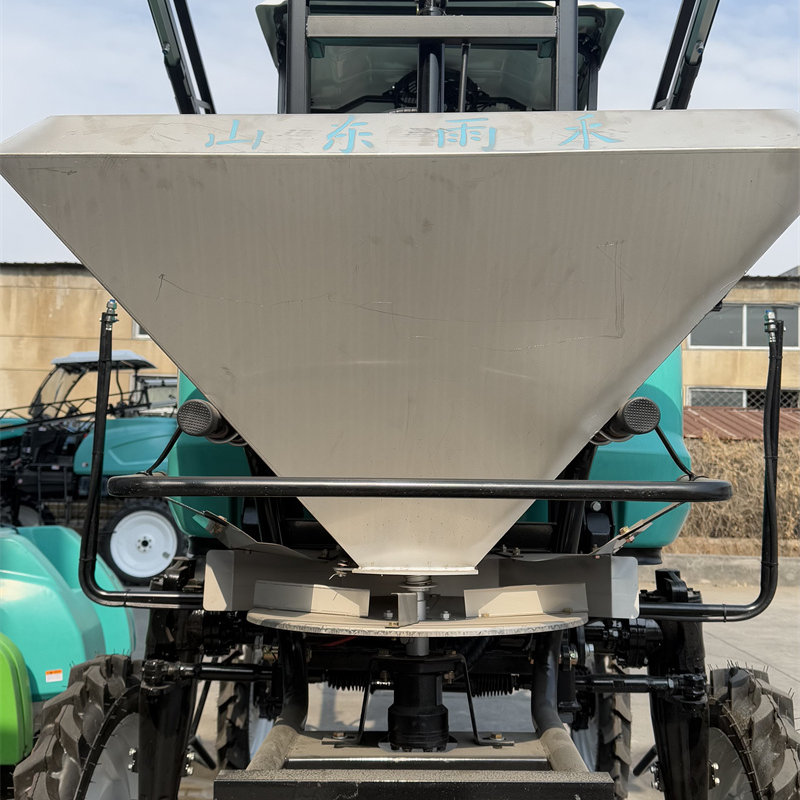
Sizing up requires a simultaneous audit of your towing tractor. We consider this a critical hidden bottleneck. A high-capacity Agricultural Fertilizer Spreader is useless without adequate towing power.
You must frame safety risks realistically. Heavy trailed units easily push lighter tractors downhill. This push effect compromises steering entirely. It eliminates braking power right when you need it most. The tractor’s operating weight must safely anchor the fully loaded implement. You often need specific front or wheel ballast to maintain control. We recommend ensuring the tractor weighs at least as much as the fully loaded trailer behind it.
You need a realistic baseline for trailed systems. Calculate your requirements systematically. Follow this proven estimation framework:
Determine Gross Tonnage: Calculate the fully loaded gross tonnage of the implement.
Apply the Multiplier: Factor in a baseline multiplier. Expect about 10-15 horsepower per loaded ton.
Add Internal Demands: Add the manufacturer's base power requirement for operating internal spinners and chains.
Include a Safety Margin: Add a final 10% safety margin to handle varied terrain securely.
Using this framework prevents dangerous stalls. It ensures smooth operation across steep gradients. You maintain consistent drive speed during difficult uphill climbs.
Farmers constantly push for wider field coverage. However, massive width introduces new agronomic challenges. You must understand distribution physics before scaling up.
Dual-spinner systems undeniably offer massive throw widths. They broadcast material far across the field. They utilize rapid centrifugal force. Yet, lighter materials face high susceptibility to wind drift. Outer edges of the pattern suffer from erratic distribution. You lose accuracy when applying lightweight urea on unpredictable windy days.
Buyers must remember overlap rules. Effective dense coverage typically represents only 75% of the visible throw distance. You must plan exact routing. Follow these guidelines:
Measure the full visible throw of the machine accurately.
Calculate exactly 75% of that measured distance.
Set your GPS guidance passes using this newly reduced number.
Maintain consistent driving speed to guarantee dense, uniform overlap.
You cannot rely on the extreme outer edges for adequate fertilization. Proper overlap ensures uniform crop growth.
Scaling up application width demands greater mechanical control. Consider upgrading to massive 60-90 foot application booms. Pneumatic systems step in to ensure uniform distribution. Air moves material through tubes directly to localized deflectors. This process neutralizes wind variables completely. You apply nutrients straight down into the crop canopy. You minimize edge-yield loss. You maximize crop uniformity across the entire field.
Your machine size dictates the necessary drive mechanism. You cannot rely on basic mechanics for enterprise-level accuracy. Let us examine how drive types impact application quality.
Mechanical PTO systems prove structurally robust and straightforward. They remain incredibly accessible for smaller capacities. They utilize standard tractor splines. However, they carry a major operational limitation. They are entirely RPM-dependent. Altering your tractor speed immediately affects the spread pattern. If you slow down for a muddy patch, the disc speed drops. This trait makes precise rate control notoriously difficult during shifting field conditions.
Large-capacity setups demand hydraulic systems. They are essential for high-efficiency operations. Hydraulic drives allow independent control of the floor chain and the spinners. You maintain consistent disc speed while adjusting the floor belt pace. If the tractor slows down, the hydraulic flow compensates. The spread pattern remains perfectly uniform.
Hydraulic drives serve as the absolute prerequisite for integrating advanced GPS mapping. Variable Rate Technology (VRT) relies on dynamic hydraulic adjustments. You map soil data accurately before the season begins. The system adjusts output dynamically across varying field zones. It reads the prescription map continuously. It applies more nitrogen to nutrient-poor zones automatically. It prevents both under-application and dangerous chemical runoff.
Finalizing your equipment size demands careful evaluation. Base your final decision on material type, tractor limits, and acceptable refill downtime. Do not buy based purely on maximum hopper volume. Focus on durable construction and operational efficiency. You must align your machine dimensions with your actual daily acreage targets.
Consider sourcing machines utilizing premium anti-corrosion features. Hoppers built using 304 stainless steel outlast standard alternatives. Look for heavy-duty powder-coated frames. They resist caustic chemical damage brilliantly. A slightly smaller but higher-quality machine yields superior operational longevity. You can often achieve a 15-to-20-year lifespan using excellent materials. You protect your operation from unexpected breakdowns.
Take immediate action today. Calculate your average field-to-tender-truck distance accurately. Assess your typical application weather window. Consult an equipment specialist right away. Review your specific tractor specifications thoroughly. Verify hydraulic flow rates and gross vehicle weight before requesting a machine demo.
A: Avoid guessing entirely. Test your equipment using the "Rule of Thirds." Set the gate to one-third of its maximum capacity. This setting serves as a highly reliable baseline. It allows for safe, slow-release test passes. Run this test pass over a specifically measured grid. Always complete this step before attempting any full-field application. It prevents you from accidentally burning your crops.
A: It is generally not recommended unless you apply specific modifications. Light seeds displace easily in windy conditions. High-clearance broadcast setups create excessive drift. This drift ruins your distribution pattern. You should utilize pneumatic booms or specialized drop mechanisms instead. These dedicated systems provide the strict precision required. They keep tiny seeds exactly where you want them.
A: Routine maintenance impacts efficiency massively. You must perform regular calibration testing and immediate bearing lubrication. Execute thorough post-use washdowns every single time. These steps prevent corrosion-induced flow restrictions inside the hopper. Clean equipment maintains your intended spread pattern perfectly. Proper daily care eliminates unpredictable material clumping. It ultimately prevents massive fertilizer waste across your fields.


