

Views: 0 Author: Site Editor Publish Time: 2026-05-29 Origin: Site


An Agricultural Fertilizer Spreader operates in highly corrosive environments day after day. Poor maintenance does not just degrade your equipment. It directly impacts crop yield through uneven nutrient distribution.
Neglect brings hidden costs you might not notice immediately. Caustic materials like urea and agricultural lime cause aggressive corrosion. Improper lubrication blows out critical seals. Worn spinner fins create damaging "zebra striping" patterns across your fields. These issues waste expensive inputs and hurt your bottom line.
We provide a definitive, evidence-based maintenance framework below. You will learn how to extend equipment life and ensure application accuracy. You can also use these practical guidelines to evaluate when replacing your machinery makes more sense than constantly repairing it.
Corrosion mitigation is a daily requirement: High-nitrogen fertilizers like urea require daily cleaning, while phosphorus and potassium applications can be managed weekly.
Precision dictates yield: Calibrating for effective swath width and running a "catch test" reduces application errors to a strict 2-3% margin.
Lubrication requires exact specs: Over-greasing damages seals, and using acidic waste oil on chains accelerates wear. Strict adherence to fluid volumes and types is mandatory.
Strategic off-season storage prevents degradation: Releasing spring tension, applying biodegradable rust inhibitors, and rotating tires to prevent flat spots are non-negotiable for preserving asset value.
Maintenance involves much more than avoiding unexpected breakdowns. It primarily protects your expensive fertilizer investment. A poorly maintained spreader wastes valuable inputs rapidly. It causes localized crop burning in some areas. It leaves other areas completely starved of nutrients. Both scenarios destroy your potential harvest yield.
Material build-up poses a severe threat to your machinery. Agricultural wet lime and caustic fertilizers act like sponges. They lock ambient moisture against the metal surfaces of your equipment. This aggressive combination corrodes metal hoppers quickly. Chassis components will rust out if you do not neutralize these chemicals. You must address this daily to protect the machine's structural integrity.
You need a standard for maintenance success. A successful protocol results in zero unplanned field downtime during critical application windows. It guarantees verifiable and repeatable application rates. Finally, meticulous upkeep ensures maximum resale value when you eventually trade the machinery in.
| Component Neglected | Immediate Consequence | Long-Term Yield Impact |
|---|---|---|
| Spinner Fins | Uneven spreading (Zebra striping) | Localized crop burning and nutrient starvation |
| Metal Hopper | Moisture retention and chemical rust | Contaminated inputs and equipment failure |
| Drive Chains | Binding and erratic delivery speeds | Inconsistent application rates across the field |
You must wash your spreader immediately after use. This protocol prevents chemicals from hardening overnight. Use mild water pressure for your daily cleaning routine. High-pressure washers can force corrosive water past sealed bearings. Use a simple rule of thumb for cleaning schedules. Clear urea from the machine daily. You can clear phosphorus and potassium weekly because they react less aggressively.
Hopper and chute clearance requires physical effort. You must scrape hardened build-up from the fertilizer chute manually. This ensures the material falls squarely onto the spinners. Any blockage deflects the fertilizer off-center. An off-center drop drastically skews your spread pattern.
Thorough drying matters just as much as washing. You must dry the equipment completely before storing it. Sun drying works incredibly well. You can also use heavy-duty air blowers to speed up the process. Drain all dead zones and hollow frame tubes. Standing water initiates unseen rust from the inside out.
Apply anti-corrosion treatments after the machine dries. We recommend applying a thick layer of biodegradable oil into crevices. Spray it into corners and over exposed moving parts. This prevents oxidation effectively. Biodegradable options keep your operation environmentally compliant while protecting bare metal.
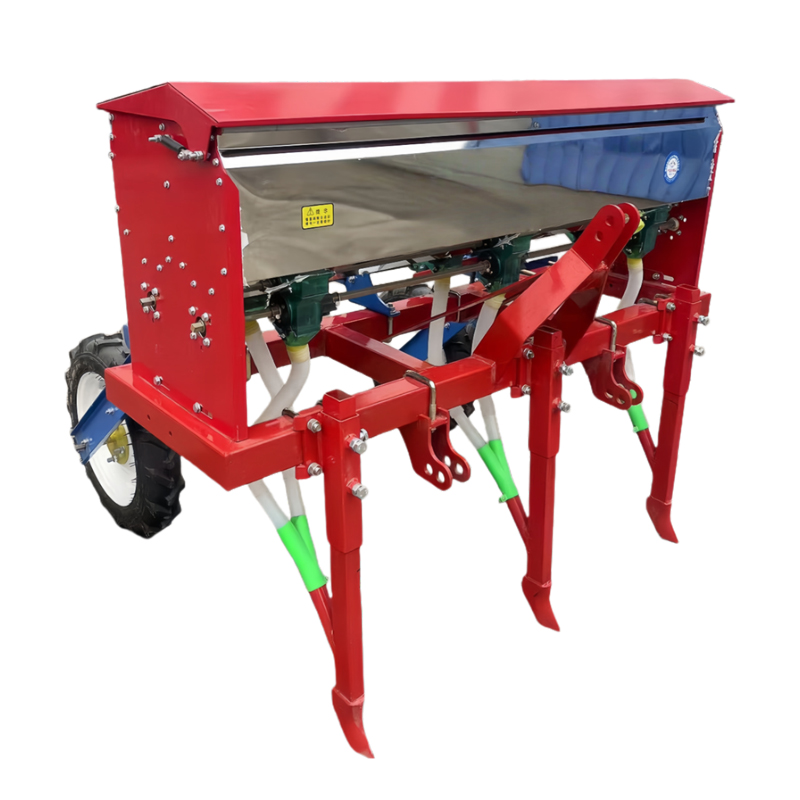
Belt and chain tensioning requires precise adjustments. You must check "belt over chain" configurations frequently. Maintain a strict 36 to 40-inch distance to the edge. Proper tension prevents the belt from slipping under heavy loads. It ensures a consistent flow of material to the rear chute.
Lubrication requires strict adherence to manufacturer guidelines. Guesswork destroys modern spreader components. Follow these specific rules:
Chains: Use a 3:1 mixture of diesel and fresh motor oil. We explicitly warn against using acidic waste oil. Combustion byproducts in used oil accelerate chain corrosion.
Gearboxes and Bearings: Limit gear oil to exact capacities. Commercial broadcast spreaders often take exactly 0.7 quarts. Over-greasing axle bearings will blow out the protective seals. Add grease only when specified.
Plastics: Avoid aerosol spray lubricants entirely. Their chemical propellants dissolve polystyrene components. Manufacturers use polystyrene heavily in smaller or hybrid spreaders.
Spinner fins demand proactive replacement timelines. They warp and accumulate scale invisibly over time. You cannot always see the wear until your crop emerges in uneven strips. Replace fins on large-scale equipment every 25,000 to 35,000 acres. This maintains perfect spread uniformity. Ensure the alignment holes match precisely when installing the new parts.
Factory settings rarely reflect real-world field conditions. Your individual driving speed alters the application rate. Fertilizer densities vary drastically between batches. Machine wear changes how material flows. Manual charts offer a helpful starting point. They do not replace manual calibration.
You should use the "Pan Test" to measure your effective swath width. Place 1-square-foot catch pans at 1-foot intervals across a flat test area. Run the Agricultural Fertilizer Spreader over the center pan at your normal operating speed. Weigh the contents of each pan. The effective swath width is the distance between the left and right pans collecting exactly half the volume of the center pan.
| Calibration Type | Methodology | Primary Benefit |
|---|---|---|
| Static Calibration | Catching and weighing material over a 50- or 100-foot test run. | Verifies exact pounds-per-1,000-sq-ft output before hitting the field. |
| In-Field Calibration | Running a set acreage and timing how fast the hopper depletes. | Accounts for terrain bumps, real-world speeds, and PTO variations. |
You can also use the grid pattern application method to ensure uniformity. Set your equipment to drop exactly half the required rate. Drive the field in a crisscross or orthogonal pattern. This method masks minor mechanical skipping. It also smooths out any accidental overlap issues.
Storage preparation determines how your equipment performs next spring. Tension release serves as your first crucial step. Instruct operators to store equipment with the discharge gates fully open. This simple action releases unnecessary tension on the return springs. Springs lose their elasticity if compressed for months.
Tire and undercarriage management prevents costly replacements. Do not let the machine sit in one exact spot all winter. Move the equipment periodically during long off-seasons. This shifting prevents the heavy tires from developing permanent flat spots. Flat-spotted tires bounce violently in the field.
Environmental controls protect sensitive components. Keep the machine indoors. Ensure the storage area remains dry. UV protection extends the life of poly-hoppers significantly. Do not stack heavy items on top of the hopper. Pressure cracks plastic components during freezing temperatures.
Tracking your maintenance burden helps you make smart equipment decisions. You should record the labor hours spent cleaning the machine. Track the time spent unjamming the chute. Log the hours dedicated to replacing corroded parts. High maintenance hours indicate your current equipment drains productivity.
You must evaluate features against operational outcomes. Persistent corrosion means the structural integrity is compromised. Failing hydraulic drives cause erratic spinner speeds. An inability to hold calibration wastes expensive fertilizer daily. These critical failures indicate you should replace the unit entirely rather than patch it.
Modern replacements solve many traditional maintenance headaches. Newer models utilize advanced materials like poly hoppers and stainless steel chains. These materials resist caustic fertilizer naturally. Precision agriculture tech includes hydraulic variable rate control. This technology automatically adjusts flow rates, reducing your manual calibration burden.
Audit your current equipment downtime this season. Take action if your machine consistently misses application targets. Contact an equipment specialist to review your needs. A modern, low-maintenance spreader often proves highly profitable. It saves input costs and protects your valuable time.
Maintaining your spreading equipment requires disciplined execution. It combines rigorous daily hygiene with exact lubrication volumes. Seasonal calibration guarantees your nutrients reach the soil accurately. You cannot cut corners on these routines without risking your yield.
Disciplined maintenance pays for itself rapidly. It prevents wasted fertilizer inputs. It protects crop yields from severe nutrient burn. Your machinery will perform reliably when your application window opens.
We recommend standardizing your farm's approach today. Download a pre-operation and post-operation checklist for your crew. Consult with an equipment specialist to review potential hardware upgrades before the next season begins.
A: No. Used or waste motor oil contains acidic byproducts created during engine combustion. These acids aggressively accelerate corrosion on the metal chain. Always use fresh oil or a recommended mixture of fresh oil and diesel for lubrication.
A: Daily. Urea attracts moisture from the air rapidly. It will form hard, corrosive blocks if left in the hopper overnight. Less reactive materials, like certain potassium fertilizers, can safely be cleaned on a weekly basis.
A: This typically happens due to worn or misaligned spinner fins. It can also result from a blockage in the fertilizer chute causing material to drop off-center. Check the fins for scale buildup and verify alignment holes are set correctly.
A: No. Always check your specific operator's manual first. Many modern gear and bearing systems are sealed or self-lubricating. Adding grease to these sealed parts can attract abrasive dirt or completely blow out critical internal seals.


