

Views: 0 Author: Site Editor Publish Time: 2026-07-06 Origin: Site


Chemical inputs rank among your highest recurring operational costs today. Herbicides, pesticides, and fertilizers demand precise, timely application. An improperly sized configuration quickly causes massive chemical waste. You might also face uneven crop protection and subsequent yield loss. Evaluating equipment goes beyond simply picking the largest tank size available. You must carefully match implement weight, pump capacity, and boom width. These elements must align seamlessly alongside your existing tractor capabilities. They must also match your specific field topography. Navigating these variables often feels overwhelming for many farm operators. This article provides a structured, evidence-based evaluation framework. We help you systematically shortlist and select the correct system. You will learn how to assess structural components and hydraulic constraints. We guide you toward optimal application efficiency for your specific agricultural operations. Proper selection maximizes your agronomic investment over the long term.
Match Implement to Tractor: A tractor mounted boom sprayer requires careful calculation of 3-point hitch lift capacity and front-end weight distribution to prevent soil compaction and ensure safety.
Boom vs. Boomless Context: Boom sprayers offer superior precision and drift control but require relatively clear, obstacle-free terrain compared to boomless alternatives.
Component Quality Over Sticker Price: Evaluate pump types (diaphragm vs. centrifugal), nozzle bodies, and frame durability, as these dictate Total Cost of Ownership (TCO) and maintenance downtime.
Efficiency Dictates Size: Tank capacity and boom width should be calculated based on required gallons per acre (GPA), field size, and acceptable refill frequency, not just maximum budget.
Let us establish the foundational operational context first. You are likely evaluating a traditional Boom Sprayer over a boomless model. Boomless units rely on a single central cluster nozzle. They broadcast a wide swath but lack crisp edge definition. Traditional models deliver highly controlled, overlapping spray patterns consistently. This mechanical precision is absolutely essential for strict chemical label compliance. Regulators increasingly demand exact application rates near sensitive environmental zones. Controlled overlapping also dramatically reduces wind drift potential. You place the active ingredient exactly where crops need it most.
We must consider terrain limitations as a direct trade-off. Fixed horizontal arms require relatively flat, cleared farmland to function optimally. What happens near heavily wooded borders or complex fence lines? Deeply rutted ground or extreme gradient perimeters present serious navigational hazards. The risk of devastating structural strikes increases exponentially in these environments. Operators must slow down significantly to navigate safely around physical obstacles. You lose efficiency if the terrain constantly threatens the outer wings.
Reach a clear decision milestone before looking at specific brands. Evaluate your primary agronomic success criteria honestly. Do you demand absolute uniform coverage across every inch? Is chemical efficiency a non-negotiable metric for your operation? If you answer yes, a structured horizontal application system represents the correct category. It provides the reliable consistency modern farming demands.
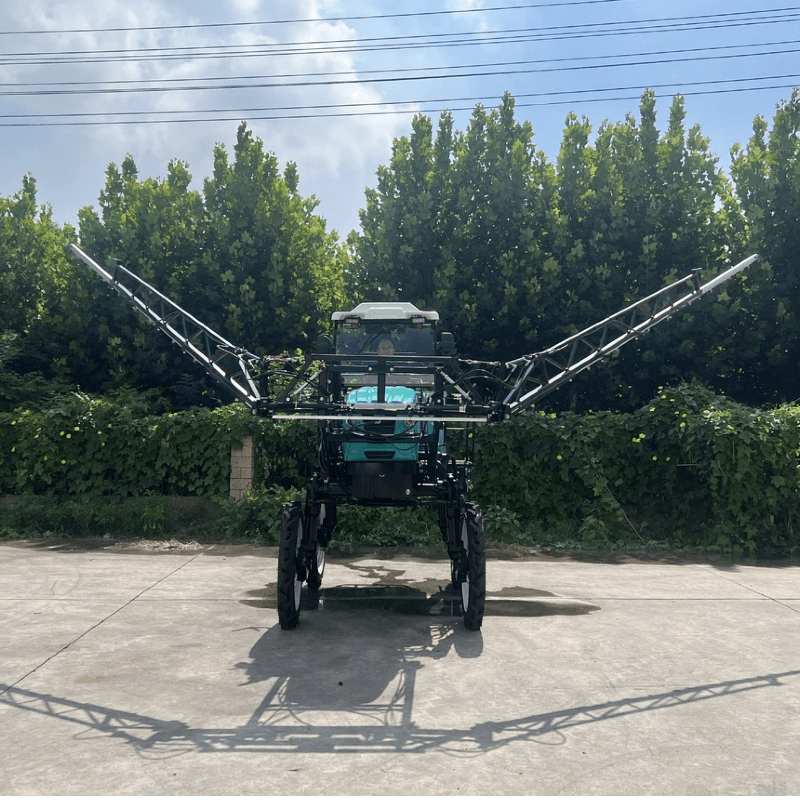
Choosing the right mounting style dictates your daily field efficiency. You must decide between a 3-point hitch system and a pull-type unit. Each configuration serves very distinct operational profiles.
A tractor mounted boom sprayer attaches directly to the 3-point linkage. High maneuverability strictly defines this equipment category. They excel remarkably in smaller or irregularly shaped field boundaries. You get a much tighter turning radius at the headlands. Backing into tight corners becomes a simple, straightforward task. Furthermore, they generally carry a significantly lower initial purchase footprint. However, you face strict operational limitations and mechanical risks. The tractor’s hydraulic lift capacity creates a hard upper boundary. Rear axle weight limits present serious safety constraints during operation. Consequently, manufacturers usually cap these units at lower tank capacities. You will typically see volumes ranging between 400L and 1000L.
Trailed or pull-type models offer a completely different mechanical approach. The unit carries its own weight on a dedicated rear axle. This structural separation allows for massive liquid tank capacities. You easily find models holding well over 1000L of mixture. You drastically reduce refill trips across large, contiguous acreage. Less time refilling means more time actively protecting your crops. Conversely, these larger units introduce higher soil compaction footprints. The extra wheels press heavily onto delicate root zones. They prove far less maneuverable in tight or awkward headlands. Reversing a heavy trailer setup requires considerable operator skill. They also demand a substantially higher upfront capital investment.
Apply basic shortlisting logic to finalize this specific choice. Choose the mounted configuration for ultimate agility and smaller plots. Opt for trailed units for high-acreage, straight-line operational efficiency. Make this transition whenever your tractor lift capacity creates a bottleneck.
| Feature Requirement | Mounted Systems | Trailed (Pull-Type) |
|---|---|---|
| Maneuverability | Excellent in tight headlands | Limited turning radius |
| Tank Capacity Limit | Low to Medium (400L - 1000L) | High (1000L+) |
| Primary Constraint | Tractor 3-point lift capacity | Soil compaction risk |
| Ideal Acreage Profile | Small, irregular plots | Large, continuous fields |
You must confront the weight-to-horsepower reality immediately. Tank size directly dictates payload stress on your machinery. A 700L tank full of water weighs significantly more than an empty vessel. Water alone adds roughly 8.34 pounds per fluid gallon. Chemical suspensions often weigh slightly more than pure water. You must check the official tractor manual carefully. Confirm the absolute maximum 3-point lift capacity before mounting any implement. Exceeding this limit causes dangerous front-end lift. You will experience severe steering loss and potential hydraulic failure. Always add front suitcase weights to counterbalance heavy rear implements safely.
Follow these structured steps for width and pass calculations:
Determine your total workable farm size in acres.
Establish your desired target gallons per acre (GPA).
Select a theoretical horizontal width (e.g., 20ft versus 40ft).
Calculate the total linear passes required to cover the field.
Account for turning time at the end of each pass.
Determine how many acres one full tank realistically covers.
Local terrain topography dictates realistic physical width limits. Wider horizontal arms theoretically increase your daily application efficiency. However, they suffer greatly from "boom bounce" on uneven ground. Excessive bouncing compromises spray uniformity entirely across the outer sections. The nozzles dip too close or rise too high. This fluctuation destroys the required 30-50% spray overlap pattern.
Pump flow rate (GPM) requirements finalize the sizing phase. The pump must adequately supply the full system width. It needs to maintain your desired speed and application pressure. It must also generate sufficient bypass flow simultaneously. This continuous bypass flow guarantees vigorous tank agitation. Proper agitation keeps chemical suspensions uniformly mixed from top to bottom. Powders will settle and clog lines without aggressive fluid agitation.
We must evaluate internal mechanical parts to ensure longevity. Component selection directly impacts your daily operational uptime. Cheap plastic fittings break quickly under continuous UV exposure.
Pump selection usually comes down to two primary technologies:
Diaphragm Pumps: These mechanisms work best for high-pressure applications. They are inherently self-priming, saving you setup time. They handle abrasive wettable powders exceptionally well without internal scoring. The rhythmic pulsing requires a dampener for smooth output flow.
Centrifugal Pumps: These excel in entirely different scenarios. They deliver high volume and massive flow rates easily. They typically operate at much lower baseline pressures. They require a flooded suction line since they cannot self-prime. They work beautifully for large-scale liquid fertilizer applications.
Plumbing and nozzle bodies demand close physical inspection. Look for multi-tee nozzle bodies during your evaluation process. These rotating turrets allow rapid switching between different spray patterns. You can flip from a flat fan for broadcast application easily. You might switch to an air-induction nozzle for strict drift control. This manages droplet size seamlessly without requiring hand tools in the dirt.
Suspension geometry and breakaway features protect the primary frame. Always evaluate the core mechanical joint design closely. A credible implement must feature a breakaway hinge mechanism. This prevents catastrophic structural damage during accidental impacts. The outer section simply folds backward if it strikes an obstacle. Powerful return springs pull the arm back into position afterward. A robust central pivot also keeps the frame level on hillsides.
Calibration readiness ensures strict legal and environmental compliance. Agricultural extension guidelines emphasize precise application standards globally. Your chosen equipment must be inherently easy to calibrate physically. Look for highly accessible pressure regulators near the operator station. Ensure all fluid gauges remain easy to read from the seat. They should feature liquid-filled, vibration-damped dials for pinpoint accuracy. Bouncing needles make field-speed pressure adjustments practically impossible.
Cleanout efficiency prevents severe subsequent crop damage. You must evaluate the internal tank design and sump shape carefully. Complete fluid drainage prevents chemical cross-contamination between different applications. Leaving traces of a broadleaf herbicide ruins your next vegetable crop. You cannot afford to apply herbicide residue during a fungicide pass. A steep, conical sump guarantees liquids drain out fully every time. Integrated clean-water rinse tanks offer a massive operational advantage here.
Maintenance accessibility and dealer support keep you moving forward. Lower initial sticker prices mean absolutely nothing during critical application windows. Fungal outbreaks require immediate, timed responses to save yields. You might need replacement nozzles, pump diaphragms, or structural parts instantly. If local dealers cannot supply them, you lose valuable field time. Always verify local parts availability before finalizing any machinery purchase. Ensure filters remain accessible for quick daily cleaning routines.
Selecting the ideal agricultural application equipment demands thorough analysis. Your evaluation matrix balances tractor compatibility, field topography, and application specifics. Weight limits and hydraulic horsepower dictate tank capacity safely. Width dimensions and advanced suspension mechanisms manage terrain challenges effectively. Finally, the right pump and nozzle combination guarantees ultimate precision application. Taking shortcuts during evaluation leads to costly agronomic mistakes later.
Take direct action before requesting quotes or contacting machinery dealers. First, audit your current tractor specifications thoroughly. Locate your exact 3-point lift capacity and available rear hydraulic remotes. Next, calculate your required gallons per acre (GPA) baselines. Map out your most restrictive field gateways and headlands physically. These concrete numbers will guide you toward the perfect spraying solution. You will approach dealers with confidence and exact technical requirements.
A: It depends entirely on the full tank weight and the tractor's 3-point hitch capacity rather than just engine HP. Always calculate the weight of water or chemical mixtures. Water weighs approximately 8.34 lbs per gallon. Add this liquid weight to the dry weight of the sprayer. Match this total against your tractor's rated rear lift limits to ensure safe transport and steering control.
A: The ideal height is typically 20 to 30 inches above the target canopy. This depends heavily on your specific nozzle angle. For example, 80-degree spray angles require different heights than 110-degree spray angles. Proper height adjustment helps you achieve the necessary 30-50% overlap. This overlap ensures uniform coverage across the entire swath without excessive drift.
A: You should calibrate at the beginning of every operating season. Recalibrate whenever switching to a radically different chemical formulation. You must also calibrate if you change out the nozzles. Frequent calibration ensures strict chemical label compliance. It prevents costly over-application and protects adjacent sensitive environments from unwanted chemical drift.


