

Views: 0 Author: Site Editor Publish Time: 2026-07-05 Origin: Site


Modern farming operates under immense pressure today. Rising chemical input costs restrict profitability across operations. Tight application windows squeeze margins even further. Growers must maximize every single pass across their acreage. Unfortunately, inefficient application methods hide significant operational drain. Chemical waste erodes budgets silently during each cycle. Crop burn from overlapping passes directly damages harvest potential. Excessive labor hours keep teams in the field much longer than necessary. These inefficiencies threaten both crop yields and environmental sustainability. We must address these daily bottlenecks directly.
Consider the Boom Sprayer not merely as an equipment upgrade. Think of it as a calculated investment designed to stabilize application rates. It ensures strict environmental compliance while maximizing input utilization. In this comprehensive guide, you will uncover how advanced spraying technology fundamentally shifts farm operations. We will explore precision mechanisms, crucial evaluation metrics, and practical implementation strategies to drive measurable efficiency.
Boom sprayers drastically reduce application time by covering wider swathes (up to 120+ feet) in a single pass.
Precision nozzle control and boom stability mechanisms minimize chemical drift, directly reducing input waste and environmental liability.
Evaluating a crop spraying machine requires balancing tank capacity against soil compaction risks and tractor horsepower limits.
Achieving stated ROI depends heavily on routine calibration, proactive nozzle maintenance, and operator training.
Traditional crop protection often relies on outdated application methods. These legacy methods introduce massive inefficiencies into your daily routine. Input waste stands out as a primary culprit here. Inconsistent pressure leads to poor droplet distribution across the plant canopy. This forces operators to over-apply chemicals just to ensure adequate coverage. You end up spending far more on expensive herbicides and pesticides than agronomic science requires.
Yield penalties present another severe financial drain. Biological impact depends heavily on precise application timing and volume. Consider the dual risks of inaccurate chemical delivery:
Under-application: Failing to hit target rates leaves weeds and pest populations unchecked. This directly reduces overall yield volume at harvest.
Over-application: Excessive chemical pooling causes severe phytotoxicity. It damages plant tissue, stunts root development, and burns delicate crop foliage.
Labor and time bottlenecks compound these agronomic issues. Unpredictable weather strictly dictates your available spraying windows. Slow application speeds drag out operations dangerously close to weather shifts. Frequent refilling wastes valuable daylight hours. Every minute spent mixing chemicals equals a minute lost in the actual field. These delays frequently push applications outside optimal biological windows.
A modern crop spraying machine completely redesigns agricultural application. It tackles historical inefficiency through engineered precision and automation. Let us examine the core mechanisms driving this superior performance.
Acreage velocity improves dramatically through expanded swath widths. Upgrading from basic broadcast methods changes your operational math entirely. Wide booms cover extensive ground quickly. A single pass covering 120 feet drastically reduces tractor trips across a field. You save hours of fuel and labor per hundred acres. This speed allows operators to finish large plots before wind speeds increase mid-day.
Terrain undulations constantly threaten application uniformity. Boom stability and terrain tracking solve this problem beautifully. Active suspension systems absorb severe field shocks. They prevent boom yaw and roll over rough dirt clods. Auto-height control keeps nozzles at the exact optimum distance from the canopy. It prevents the boom arms from dipping into the dirt or soaring too high into the wind.
Precision droplet control maximizes biological efficacy on the leaf. Advanced nozzle technology dictates precise droplet sizing in microns. Consistent pump pressure supports these nozzles continuously. Pulse width modulation systems maintain pressure independent of tractor speed. You achieve optimal leaf adhesion while significantly reducing dangerous wind drift.
Finally, section control virtually eliminates chemical overlap. GPS-integrated boom section shut-offs act automatically. They stop specific nozzles from firing over already treated areas. You avoid double-spraying headlands, point rows, and irregular field boundaries. This targeted shut-off mechanism protects your crop from concentrated chemical burns.
Evaluating return on investment goes far beyond simple accounting. It requires measuring tangible agronomic benefits against physical equipment capabilities. Capital expenditure finds justification through consistent, year-over-year chemical savings. Precision mechanisms reduce overlap and drift effectively. Farm operations often record chemical usage reductions between 10 and 20 percent. These immediate material savings quickly offset the initial equipment acquisition phase.
Tank capacity presents a critical balancing act. We must evaluate this tradeoff carefully before selection. Larger tanks mean fewer refill stops during peak hours. You gain continuous, uninterrupted field time. However, immense liquid weight increases soil compaction risks drastically. Compaction destroys soil structure and reduces root penetration. Wet field conditions amplify this agronomic risk significantly. High axle loads compress oxygen out of the topsoil.
Consider the following tradeoffs between tank capacity and soil impact:
| Tank Capacity Profile | Refill Frequency | Soil Compaction Risk | Ideal Use Case |
|---|---|---|---|
| Low (Under 500 Gallons) | High | Minimal | Soft, wet soils; small irregular fields |
| Medium (500 - 1000 Gallons) | Moderate | Moderate | Standard row crops; mixed terrain |
| High (1000+ Gallons) | Low | Severe (in wet conditions) | Firm ground; massive continuous acreage |
Scalability determines long-term viability for your fleet. Assess whether the equipment supports future precision agriculture upgrades. Modern operations demand variable rate application capabilities. Telemetry integration allows remote monitoring from the farm office. Individual nozzle control pushes operational efficiency even further. Ensure your chosen platform can adapt easily to tomorrow's digital technology.
Owning advanced equipment does not automatically guarantee efficiency. Real-world implementation practices dictate actual field performance. The calibration imperative demands strict attention from operators. Efficiency claims remain void without rigorous, periodic checks. You must routinely calibrate speed, pressure, and flow rate. Conducting a physical catch test validates your digital monitor readings. Even minor discrepancies skew application volumes severely over large acreage.
Maintenance overhead forms another critical operational reality. We must maintain transparency regarding standard wear parts. Diaphragms, in-line filters, and polymer nozzle tips degrade over time. They require proactive replacement before they fail mid-application. Furthermore, winterization prevents catastrophic damage during off-seasons. Freezing liquid destroys expensive pumps and intricate plumbing lines. Proper flushing and agricultural antifreeze application prevent costly springtime downtime.
Terrain limitations also pose genuine adoption risks. Wide booms struggle significantly in highly fragmented fields. Severe slopes and obstacle-heavy plots challenge overall maneuverability. Operators risk severe "boom bounce" on aggressively uneven ground. This bounce disrupts the uniform spray pattern completely. It sometimes causes mechanical whiplash damage to the outer boom arms. Match your boom width carefully to your specific topographic realities.
Selecting the ideal system requires logical filtering. You must align physical specifications closely to your agronomic needs. Mounting categories dictate your basic operational scope and tractor requirements.
| Mounting Category Comparison Chart | |
|---|---|
| Category | Characteristics & Best Fit |
| Tractor-Mounted (3-Point Linkage) | Offers high maneuverability. Excellent for tight headlands. Features limited tank capacity. |
| Trailed / Pull-Type | Provides high capacity. Requires lower tractor horsepower. Needs a wider turning radius. |
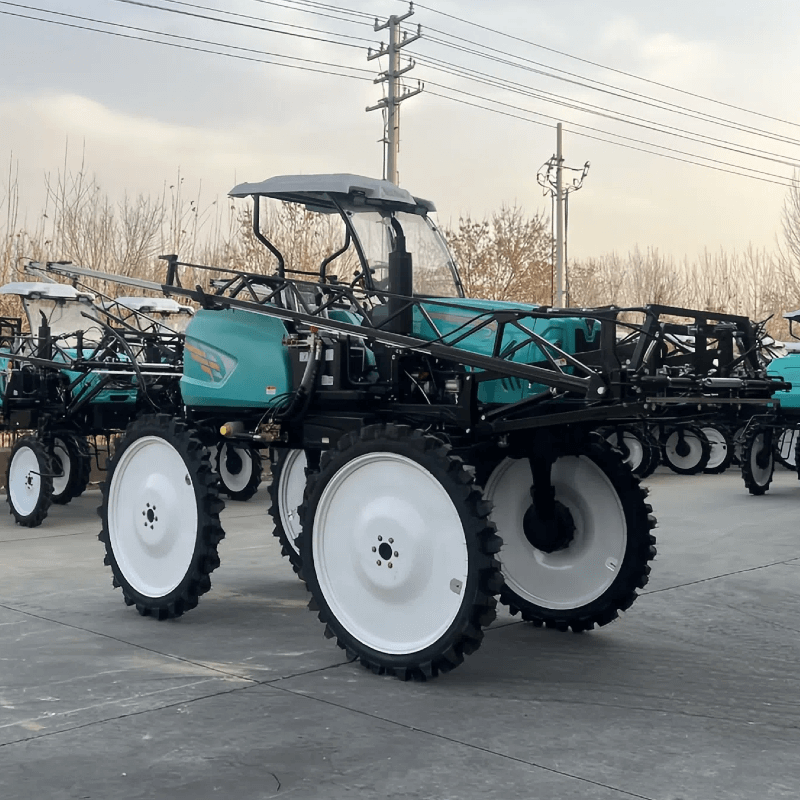
| Self-Propelled | Delivers maximum crop clearance. Huge capacity for large-scale operations. Requires dedicated capital. |
Pump selection influences chemical compatibility heavily. Centrifugal pumps handle high liquid volumes exceptionally well. They easily manage abrasive materials like wettable powders. Conversely, diaphragm pumps excel at generating consistent high pressure. They suit specific viscosities of complex liquid fertilizers better. Choose your pump based on your primary chemical payloads.
Take concrete next-step actions to finalize your decision. Follow this sequence when evaluating hardware:
Request an on-farm field demonstration to observe boom stability.
Review warranty terms thoroughly for critical suspension and pump components.
Match the proposed boom specifications to your existing tractor capabilities. Ensure your hydraulic flow can actually support the demand.
Advanced boom sprayers completely transform agricultural application. They transition crop protection from a generalized, inaccurate task into a highly precise operation. We eliminate dangerous guesswork from the daily equation. You apply exact doses exactly where plants need them most.
Hardware alone provides only half the solution. True operational efficiency emerges through a dedicated combination of elements. You need the right hardware specification paired alongside disciplined practices. Calibration and maintenance remain non-negotiable routines. Ignoring these procedures erodes your investment rapidly.
Take decisive action before your next application window opens. Consult an agricultural machinery specialist today. Audit your current application costs thoroughly. Spec a machine tailored precisely to your acreage, local terrain, and specific chemical requirements.
A: Focus on matching boom width to your planter or seeder widths. This alignment utilizes existing tramlines perfectly. It minimizes unnecessary crop trampling during field passes. A mid-sized farm typically benefits from 60 to 90-foot booms. This range balances field efficiency well against maneuverability around trees and poles.
A: Drift reduction relies on several integrated factors. Auto-height controls maintain the optimal distance above the canopy. Advanced nozzle selection produces heavier, uniform droplets less susceptible to crosswinds. Additionally, controlled operating speeds prevent air turbulence behind the machine. Together, these elements ensure chemicals hit target leaf surfaces safely.
A: Conduct a comprehensive pre-season calibration annually. Do not stop there. You must recalibrate whenever changing chemical types or installing new nozzles. Recalibration is also mandatory after replacing pump components. Regular checks verify speed, pressure, and flow rate accurately. This discipline guarantees correct application volumes all season.
A: Not always. You must verify specific tractor capabilities first. Check the hydraulic pump capacity to ensure it supports active suspension. Review drawbar weight limits to handle fully loaded tanks safely. Finally, confirm PTO specifications match the sprayer pump requirements. Undersized tractors risk hydraulic failure and unsafe braking.


