

Views: 0 Author: Site Editor Publish Time: 2026-07-07 Origin: Site


Large-scale agricultural operations face a constant and stressful bottleneck. You must balance incredibly tight application windows against crippling labor shortages. Rising chemical input costs only add to this daily pressure. Relying on standard pull-type equipment often falls short when field timing means everything. Upgrading to a dedicated self propelled boom sprayer represents a massive operational leap. This machinery fundamentally changes how you manage large acreages and tight schedules.
We designed this guide to help you evaluate the strict realities of such an upgrade. You need to know if the financial numbers actually make sense for your specific fields. We will look at strict return on investment thresholds and specific daily use cases. You will learn where making this shift creates genuine financial advantages. Read on to see if your farm has reached the critical scale needed to justify this dedicated equipment.
Scale Threshold: Self-propelled boom sprayers typically reach break-even ROI on farms exceeding specific acreage thresholds compared to custom hire.
Time Efficiency: Wider booms and higher transport speeds significantly reduce time-in-field, crucial for narrow weather or pest-control windows.
Precision & Compliance: Integrated GPS and section control reduce chemical overlap, lowering input costs and meeting strict environmental drift compliance.
CapEx vs. OpEx: High initial capital expenditure is offset by long-term savings in labor, fuel efficiency, and exact chemical application.
Large farms require immense logistical coordination during peak planting and harvesting seasons. Tying up a high-horsepower primary tractor for routine spraying limits your overall flexibility. You desperately need that tractor for heavy tillage or pulling massive planters. Relying on a pull-type unit forces a difficult compromise in your equipment roster. Pull-type setups require massive drawbar power. You burn excess fuel hauling heavy tanks behind a general-purpose tractor. Furthermore, the turning radius remains severely compromised. Operators struggle to navigate tight headlands without crushing valuable plants. A dedicated self-propelled machine frees up your primary tractors. You keep your entire heavy fleet moving efficiently across the farm.
Late-season chemical applications demand highly specialized equipment. Pull-type models simply sit too low to the ground for mid-summer work. They cause severe crop damage in tall corn, mature sunflowers, or dense cotton fields. High-clearance chassis designs give self-propelled units a distinct structural advantage. They often boast 60 to 72 inches of under-frame clearance. This specific height accommodates late-season tassels and delicate pods easily. Standard tractors simply drag their heavy axles through the foliage, destroying yield potential. Independent suspension systems further improve field terrain adaptability. Each wheel reacts to deep ruts and bumps independently. The boom stays perfectly level across highly uneven fields. You avoid skipped rows, uneven coverage, and costly chemical burns.
Weather patterns are increasingly unpredictable across major agricultural zones. You often have just a few hours to apply critical fungicides before a heavy rainstorm. Self-propelled machines excel in these high-pressure scenarios due to superior mobility. They offer impressive road transport speeds frequently exceeding 30 mph. You move between widely separated land tracts rapidly. In-field operational speeds also see major improvements. Operators can safely spray at 15 to 20 mph. Standard pull-type sprayers bounce violently at higher speeds. This bouncing completely ruins application uniformity. Dedicated sprayers feature dynamic suspension leveling. You maintain perfect nozzle height even at high speeds. You cover 1,000 acres in a single day easily. Faster turnaround times drastically mitigate your daily weather risks.
We must evaluate major machinery upgrades through a strict financial lens. Many operators debate owning a sprayer versus outsourcing the work to custom applicators. You need to know exactly when equipment ownership becomes highly profitable.
Finding your break-even point requires clear and honest math. You calculate this by dividing your aggregate lifetime expenses by the standard per-acre custom application rate in your region. Do not underestimate the hidden fees of outsourced labor. Custom applicators charge base rates plus variable fuel surcharges. They also upcharge for complex chemical mixtures or multi-product passes.
Let us look at the primary formula components you must track:
Capital Depreciation: The machine loses financial value over its functional lifespan.
Annual Insurance: Comprehensive coverage for specialized heavy machinery.
Storage Costs: Climate-controlled outbuildings protect complex electronics during off-seasons.
You compare these combined yearly figures against your historical custom hire fees. Large acreages quickly surpass the break-even threshold. A well-maintained sprayer retains significant equity after five years of use.
Ongoing operational expenses dictate your actual profit margins at the end of the year. You must track diesel consumption rates meticulously. Modern Tier 4 engines prioritize fuel efficiency, but heavy field conditions still burn fuel rapidly. Specialized maintenance also requires a dedicated budget line. You must service delicate flow meters and high-capacity centrifugal pumps annually. Operator labor costs require competitive hourly wages to retain top talent. You cannot assign a half-million-dollar machine to an untrained novice.
However, you must heavily consider the hidden costs of custom hiring. Waiting for an applicator often causes devastating yield loss. Aggressive weeds and destructive pests multiply rapidly over just three days. Timely application actively protects your harvest volume. Owning the equipment guarantees immediate field access.
Here is a simplified chart showing ownership versus custom hiring variables:
| Expense Category | Owning Equipment | Custom Hiring |
|---|---|---|
| Upfront Investment | Very High | None |
| Per-Acre Application Cost | Low | High |
| Application Timing | Immediate | Delayed (Subject to waitlists) |
| Yield Protection | Maximum Control | Variable (High risk of loss) |
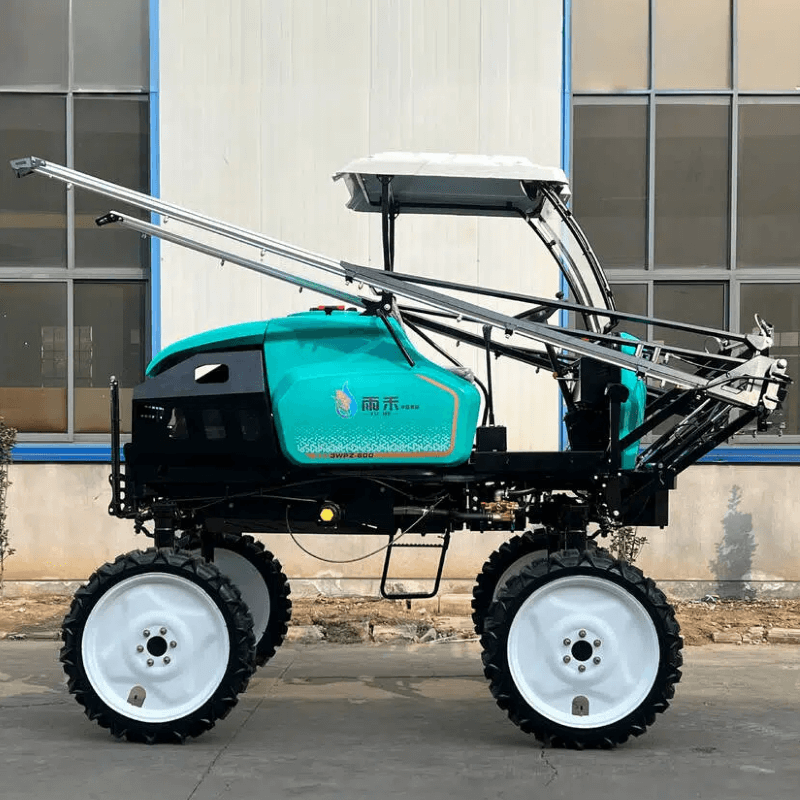
Technical specifications must translate directly into tangible business results. You need a Boom Sprayer that solves specific logistical problems on your farm. We categorize these technical solutions by their direct operational outcomes. Understanding these features ensures you select the optimal configuration for your acreage.
Overall efficiency increases when you carefully match tank volume to boom width. The interplay between tank size and boom width defines your daily productivity. A massive 1,200-gallon tank paired with a narrow boom proves highly inefficient. It creates excessive soil compaction without maximizing coverage. Conversely, a massive 132-foot boom on a small tank forces constant refilling. You spend half your day driving back to the nurse truck instead of spraying. A balanced setup reduces refill trips and limits soil compaction.
Consider this capacity matrix when evaluating equipment sizes:
| Farm Size (Acres) | Recommended Tank Capacity | Optimal Boom Width |
|---|---|---|
| 1,000 - 2,500 | 800 Gallons | 80 - 90 Feet |
| 2,500 - 5,000 | 1,000 Gallons | 100 - 120 Feet |
| 5,000+ | 1,200+ Gallons | 120 - 132+ Feet |
Modern sprayers utilize advanced electronics for exact chemical placement. Auto-steering utilizes RTK GPS for sub-inch accuracy across vast fields. You follow the exact same wheel tracks all season long. Nozzle-by-nozzle shutoff completely eliminates wasteful overlap on point rows and odd-shaped borders. Pulse width modulation (PWM) controls droplet size perfectly. It maintains exact line pressure regardless of your driving speed.
These advanced technologies directly support strict regulatory compliance. They minimize spray drift into neighboring sensitive areas or waterways. Drift compliance is strictly monitored by environmental agencies today. Failing an application audit results in devastating financial fines. Accurate digital mapping provides instant documentation of your chemical application. You can easily prove your environmental compliance during any inspection.
Intense harvest and spraying seasons demand grueling 14-hour days. Cab ergonomics function as a critical safety feature rather than a luxury. Operator fatigue causes costly and dangerous mistakes. A fatigued operator might misjudge a boundary line or ignore a clogged nozzle alarm. Air ride seating absorbs relentless field vibrations. It protects the operator's spine from repeated impacts. Active noise reduction technology keeps the cabin remarkably quiet.
Advanced climate control systems feature active charcoal filtration. They protect the operator's lungs from toxic chemical fumes and field dust. Exceptional glass visibility reduces severe neck strain during sharp turns. These premium features improve overall labor retention significantly. Operators remain highly alert and make far fewer costly errors.
You must maintain clear expectations regarding heavy equipment implementation. We believe in addressing the downsides and technical risks transparently. Understanding these challenges helps you plan accordingly. You can mitigate most risks through careful preparation.
The upfront cost barrier represents a significant financial hurdle. These assets often represent the second-largest equipment purchase on a modern farm. These machines require substantial financial commitment from your lending institution. You will likely need structured financing agreements. Interest rates heavily influence the final acquisition cost. Securing favorable interest rates requires strong farm equity and excellent credit. Evaluating your available cash flow is a mandatory first step. Leasing options provide an alternative for some operations. However, long-term equity building generally favors direct ownership for established farms.
Advanced agricultural machines bring inherent mechanical complexity. You must maintain sophisticated hydrostatic wheel motors. These operate under immense hydraulic pressure. A blown seal requires specialized diagnostics and expensive fluid replacement. Proprietary software systems require regular factory updates. You cannot simply fix these modern issues with standard hand tools.
Dealer proximity becomes an absolute necessity. You need immediate parts availability during critical spray windows. Extended downtime during a sudden pest outbreak destroys profit margins rapidly. You must ensure your local dealer offers robust mobile support. Insist on guaranteed service level agreements before signing purchase contracts.
Fully loaded self-propelled units carry immense physical weight. A 1,200-gallon tank plus a massive diesel engine creates serious ground pressure. Yield mapping consistently shows decreased crop production in deep tire ruts. Massive machines compact the delicate root zone severely. This weight leads to yield-robbing soil compaction if managed poorly.
Proper tire selection is critical to mitigate this agronomic risk. You must equip the machine appropriately before it enters the field.
Select high-flexion (VF) tires to dramatically expand the ground footprint.
Monitor tire inflation pressures daily based on the current tank load.
Utilize controlled traffic farming (CTF) paths to restrict heavy equipment to permanent tramlines.
Buyers approaching a purchase decision need structured logic. Use this decision matrix to finalize your acquisition strategy. It helps remove emotion from a massive capital investment.
Farm size fundamentally dictates your primary financial justification. Operations exceeding 2,000 acres usually see immediate operational benefits. A massive acreage simply requires exceptional speed to beat weather fronts. Crop types also influence this buying decision. Operations focusing on continuous corn face narrow application windows. Tall row crops like late-stage corn demand extreme high-clearance capabilities. Specialty crop growers prioritize precise canopy penetration. They often require specialized air-assist booms to drive fungicides deep into dense foliage.
Advanced machinery demands highly skilled operators. A modern sprayer heavily resembles a mobile computing center. Operators monitor multiple digital displays simultaneously. They manage flow rates, section controls, and complex mapping software. Assess your current labor pool honestly. Do you have staff capable of managing proprietary software? They must clearly understand GPS calibration and pulse width modulation principles. If your team resists technological adoption, this equipment upgrade will struggle. You must budget for intensive winter training clinics to prepare your staff.
You must audit your current operational spraying costs immediately. Gather your custom application invoices from the past three years. Calculate your estimated yield losses from historically delayed applications. Multiply that per-acre loss across your total farm footprint. The resulting number often pays for a machine lease entirely.
When you request a dealer quote or an in-field demo, demand specific operational metrics:
Actual fuel consumption rates per hour under heavy load.
Guaranteed response times for emergency mobile service.
Annual software subscription renewal fees and GPS unlock costs.
Transitioning to a dedicated self-propelled sprayer represents a major strategic shift for your farm. You are moving decisively away from slow, labor-intensive practices. You are fully embracing modern precision-driven agriculture. The true value of this investment lies well beyond the physical hardware itself. It resides heavily in the timeliness and pinpoint accuracy of your daily applications. You protect your yields precisely when narrow weather windows open. We strongly encourage you to consult an experienced equipment specialist today. Have them run a custom ROI analysis based strictly on your unique acreage, local custom rates, and crop rotation strategy.
A: Most units reliably operate for 3,000 to 5,000 engine hours before requiring major mechanical overhauls. Excellent preventative maintenance extends this functional lifespan significantly. Depreciation accelerates based on harsh chemical exposure and rough field terrain. Resale value typically remains very strong if you keep detailed service logs.
A: A conservative estimate places the threshold around 2,000 to 2,500 acres. However, this varies heavily based on your specific crop value. High-value specialty crops justify the investment on much smaller acreages. Extremely high local custom hire rates also lower this break-even threshold considerably.
A: Yes. Advanced section control automatically shuts off individual nozzles over previously sprayed areas. This overlap reduction directly decreases expensive chemical waste. Precise pulse width modulation guarantees you apply the exact target rate. You stop over-applying expensive inputs on field borders and point rows.
A: Hydrostatic drives use pressurized hydraulic fluid to power individual wheel motors. They offer remarkably smooth, infinite speed adjustments and exceptional maneuverability in tight corners. Mechanical drives utilize a traditional transmission and driveshaft. They provide superior power transfer efficiency and better pulling performance in deep mud.


